

Check out our latest Let’s Talk podcast episode

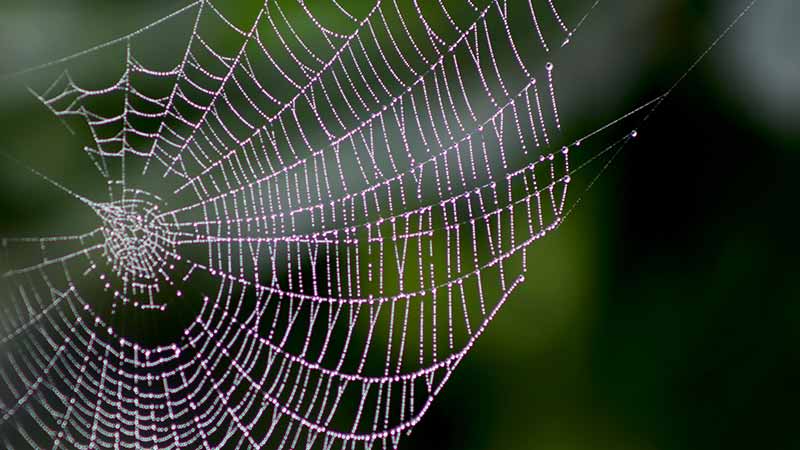
We’ve all used the world wide web to collect information on how to do most anything, from tying a necktie to understanding quantum mechanics (OK, enough with my web searches!). But a study published in the Journal of Exposure Science and Environmental Epidemiology puts a new “spin” on using the web to measure indoor air quality – using ever present spider webs to collect indoor air pollutants for analysis.

The webs are typically located in hard-to-reach places and constantly collect VOC’s, PAH’s, dust, and other airborne contaminants. The condition of the web tells scientists how long it has been in place. Using naturally occurring webs replaces the need for expensive air filtration equipment with long wait times to get results. So, maybe it’s not a bad idea to leave that spider web alone. It may help inform engineers on the type of filtration needed to maintain occupant health. – Steve Terry, DTC HVAC & Refrigeration Instructor

Mechanical PE Exam Prep That Works
Pay Up Front and Save $100!
Test Drive Your Course for Only $50!
Pay-As-You-Go and Start for Only $50!

Don’t miss out on the latest posts (and more)! Follow DTC on:

Dr. Tom’s Classroom – Achieve the Extraordinary

DR. THOMAS H. BROWN, JR. P.E

DR.THOMAS H. BROWN, JR., P.E.

The Dr. Tom Method & Strategy

Dr. Tom, as he is affectionately known, teaches the course overview lessons for Civil Engineering, outlining the Dr. Tom Method and Exam Strategy on which all DTC Reviews are based. Tom originally developed the 20-Week review format for the Mechanical PE Exams, and then, with the DTC Civil Instructors, he created the Civil PE Exam Review.

Hello, I’m Tom Brown, and I based my online 20-Week Mechanical Engineering PE Exam Review on my many years of experience preparing mechanical engineers for the PE Exam. With the help of my DTC team, I developed the tried and true structure and method that we offer online today. Our Civil and Mechanical courses will provide you will a step by step path to being successful on the exam. It requires a tremendous time commitment and effort on your part, but if you follow the plan that we have laid out for you, you will have everything you need to succeed.” – Tom Tom received his Bachelor of Science in Aerospace Engineering from Georgia Tech in 1970. He earned a Masters Degree in Engineering Mechanics from Georgia Tech in 1973. Dr. Tom holds a Ph.D. in Mechanical Engineering, earned at NC State. Today, Dr. Tom is the founder and driving force behind Dr. Tom’s Classroom where he pursues his passion of teaching engineers how to prepare for and pass the PE exam.