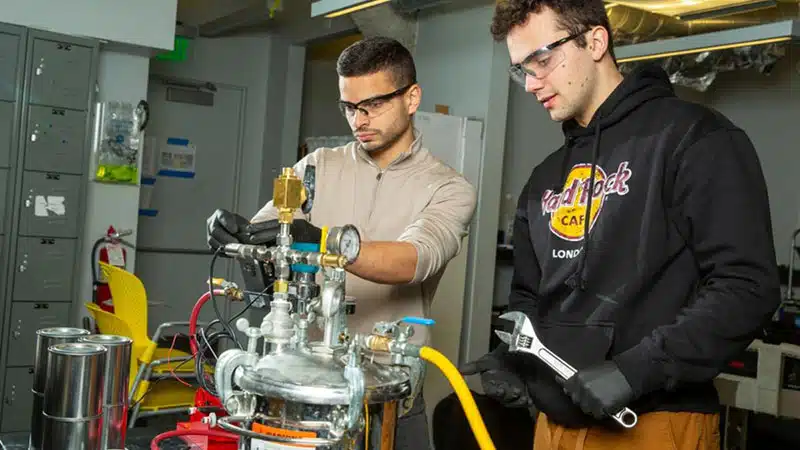
Hydrogen is probably the gold standard in “green” fuels, however producing it and storing it safely is a major challenge. Researchers at MIT came up with an interesting process that at least does not require storing the hydrogen.
First, they realized that hydrogen could be produced by adding aluminum pellets to seawater. However, the pellets, which could be obtained from aluminum cans, must be pure. Unfortunately, the pure aluminum pellets also react with the oxygen in the air forming a thin oxide layer that slows down the production of hydrogen. The researchers then realized that metals like gallium and indium would remove the oxide layer allowing the aluminum pellets to react to the seawater. It turned out that while they could recover the expensive gallium and indium, the seawater also slowed down the production of hydrogen.
Then, quite by chance, the researchers went into a nearby kitchen and for some reason added coffee grounds to the seawater. They discovered that not only did the coffee grounds prevent the production of a prohibitive layer on the aluminum pellets, but the production of hydrogen speeded up. In talking to colleagues in the Chemistry department they discovered that an ingredient in the caffeine of the coffee grounds, imidazole, allows the production of hydrogen to continue without affecting the expensive elements gallium and indium.
The researchers are encouraged by the application of the process for ocean going vessels, however there is a clear challenge for cars, trucks, and trains. This is definitely a very interesting and promising story to follow. – Dr. Tom
Mechanical PE Exam Prep That Works
Pay Up Front and Save $100!
Test Drive Your Course for Only $50!
Pay-As-You-Go and Start for Only $50!
Don’t miss out on the latest posts (and more)! Follow DTC on: